Thursday, September 18, 2014

And now . . .

I'm off to Virginia Center for Creative Arts (hereafter referred to as VCCA) for a two week writing residency.
ok, that's an easel, yes. but behind the easel is the barn where the studios are.

The purpose of the above heretofore mentioned residency is to attempt, nay, to Succeed in finishing, completing, concluding and drawing to a close book the second in the greatly beforementioned Summerhood Island series.
note Summerhood Island in script under title


Why, you may wonder to yourself, (or even out loud) is she writing in this peculiar, unusual, nay, even abnormal and irregular way?


Mostly because I can. And right soon now I am going to have to get serious, buckle down and put my nose to the grindstone (ouch)
and write at a middle reader level.

Please, all of you who are just about to make some clever retort to that last remark; hold your respective tongues. Or hold another's tongue, if one happens to be within reach . Ick


Anyway, once you have gathered up all the extraneous words in this post and thrown them out the back door you will be left with this:

I'm outta here for a while. To come back with my new book
2nd in the Summerhood Island series -
Summer of the Ghost/Thief
 

or on it. 


I shall send you juicy tidbits from the  reading and writing world so you won't forget me.

Until I return, I remain
yr hmble and obdnt srvnt

Monday, September 8, 2014

and now for something completely different . . .

New Fictional Holidays: Literary Dates to Add to Your Calendar

Daniel Lefferts

May saw geeks and sci-fi-lovers celebrating not one but two fiction-inspired holidays. First, there was May the Fourth and its flood of Star Wars-themed memes and GIFS on Facebook and Tumblr (get it? “May the force…”?). 

Next, there was Towel Day on May 25, on which fans of the late Douglas Adams carry around a towel in honor of the author and, in particular, a characteristically strange passage from his novel, The Hitchhiker’s Guide to the Galaxy, in which the towel is praised as “the most massively useful thing an interstellar hitchhiker can have.”


We at Bookish love these holidays and think fiction-inspired celebrations are far too rare a feature of the calendar. So, below, we’ve proposed five more literary dates of note, from ‘On the Road’ Day in July to a day in April on which you’re allowed to feel as paranoid about government surveillance as you see fit. I

1.Mrs. Dalloway (Annotated)

Mrs. Dalloway Day: A beautiful Wednesday in June
Virginia Woolf’s classic novel takes place on a Wednesday in June of 1923. Given how beautiful the weather is in the novel, this one can be a TBD—pick whichever Wednesday in the month will be, according to weather forecasts, the loveliest. How to celebrate? By buying flowers (yourself!) and hosting a party, of course. In general, celebrants should, in the interest of preserving their health and sanity, follow Clarissa Dalloway’s lead on this one, and not poor Septimus Smith’s.
2.    

2.The Hunger Games

Reaping Day: A dreary day in winter
The Reaping is the name given to the day on which, in the world ofThe Hunger Games, boys and girls from each district from Panem are chosen to compete in the annual Hunger Games competition. Though emissaries from the Capitol, such as Effie Trinket, try to inflect the occasion with a celebratory spirit, the event effectively means, for 23 of the 24 people chosen, certain death. Hunger Games fans can have fun with this holiday (on whichever day they end up choosing to celebrate it; given the constant dreariness of District 12, perhaps a date in February or March will do). “Winners” of the lottery can buy drinks, go on bagel runs, serve as DDs, give foot massages, etc. I’ll stop there before my suggestions get any weirder.

3.On the Road

'On the Road’ Day: July 15
“In the month of July 1947, having saved about fifty dollars from old veteran benefits, I was ready to go to the West Coast.” So begins Sal Paradise’s multipart peripatetic adventure across America—a trip that will take him to California, Mexico City, Louisiana, and back to New York, all the while showing him (and us) the unsettled and invariably engrossing milieu of mid-century North America. A day in July should be devoted to the commemoration of his journey; it’ll also serve the secondary purpose of inspiring celebrants to set off on their own road trips. So as not to collide with Independence Day weekend fun, we nominate a day at the dead center of the month, July 15.
4.     

4.Seize the Day

Day of Moral Reckoning (or, ‘Seize the Day’ Day): Whenever the mood strikes
A good book causes us to reflect on our own life, with its string of various success and failures, and a good literary-inspired holiday gives a specific time frame in which to complete such heroic acts of contemplation. Though it’s unclear on which day Saul Bellow’s novelSeize the Day takes place, pretty much any day of the year will do. Like the protagonist, Tommy Wilhelm, celebrants can spend the day wrestling with their own demons, character flaws, and ill-considered decisions and, just when all hope seems lost (let’s say around seven p.m.), finally come to accept what Bellow calls the “burden of self.” A few cocktails in the evening should round out the holiday quite nicely.


5.1984

Surveillance Awareness Day: April 4
With the NSA intercepting packages and tracking the phone calls of the entire population of the Bahamas like it ain’t no thang, the gap between the world of George Orwell’s 1984 and ours has become sliver-thin, if it exists at all. April 4, the day on which the novel begins (it’s the “bright cold day in April” when the “clocks were striking thirteen”), should serve as an annual day of heightened awareness of government surveillance and its consequences for privacy, quality of life, and the political health of our country.


Wednesday, September 3, 2014

Back to the story . . .

When last we left our heroine, she was waiting-

To keep from going crazy that first week I sketched a rough outline of changes that needed to be made in books two and three.

The second week I swore off writing altogether and read thrillers, 
 took long walks with the dogs,
 and pretended to be social. I hadn’t gone anywhere or seen anyone for more than a brief hello for the past month.

Except, of course, for my sacred Wednesday clamming date with one of the Paul’s or with Arnie. I freely admit it, I am a clam slut.

 I will with go to Nashweena pond any Wednesday with anyone who has a boat and is willing to go at low tide, whether it be 6 a.m. on a foggy cold June morning or a scorching noon in August.

But I digress. I digressed a great deal during those weeks.

I made lists of other publishers who might look at the book without an agent.
I made lists of people I knew who might know agents who might look at the book.
I made lists of things to be done once I got back to Virginia. And lists of dog breeds I liked, and old friends I hoped to see again.
Books I wanted to read. Sheet and towel colors.
I read more thrillers, and worked on the second book in the series.

Finally, what seemed like thousands of years later

but was actually about three weeks, ( I can digress a tremendous amount in three weeks), I received a reply.

Brandylane would like to see the rest of the manuscript.

I think it took me four minutes to attach the book and send it back.(three and a half minutes were spent jumping up and down.)

I won’t make you wait again. They accepted Coyote Summer for publication.
Then the real fun began.


Sunday, August 24, 2014

And some people . . .

thought Cuttyhunk Island was remote.
http://www.huffingtonpost.com/2014/08/23/tristan-da-cunha_n_5675945.html

Earth's 'Remotest' Island Is Predictably, Awesomely In The Middle Of Nowhere

Posted: Updated: 
Print Article

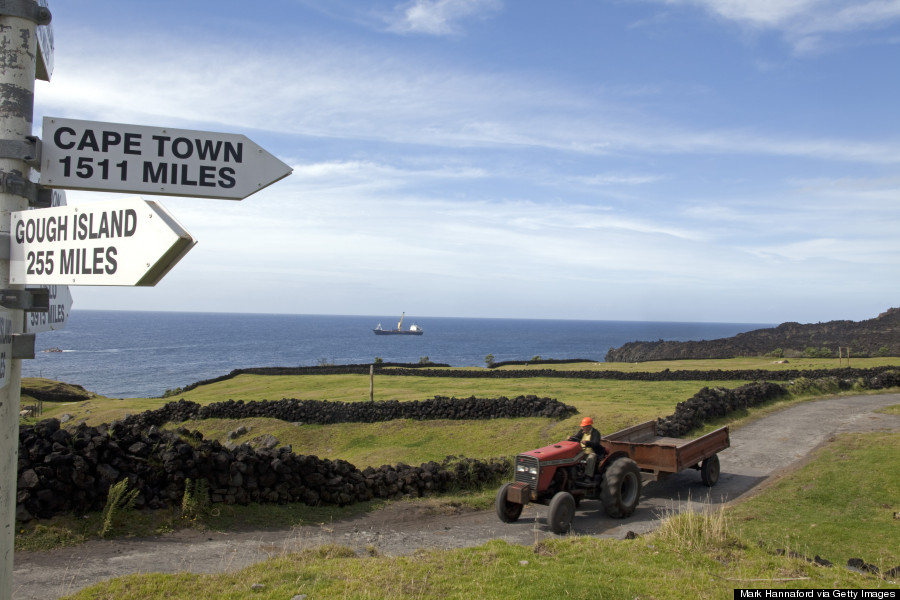
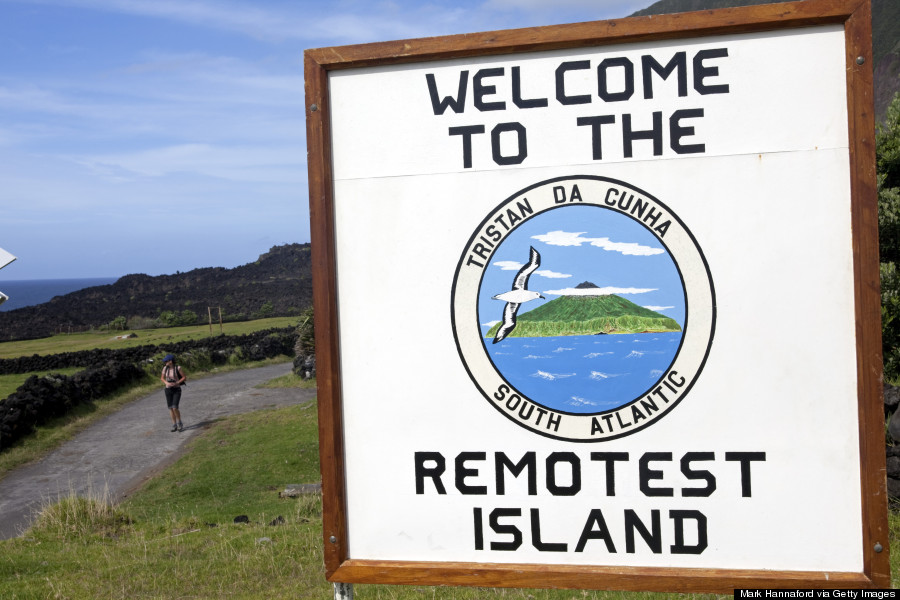
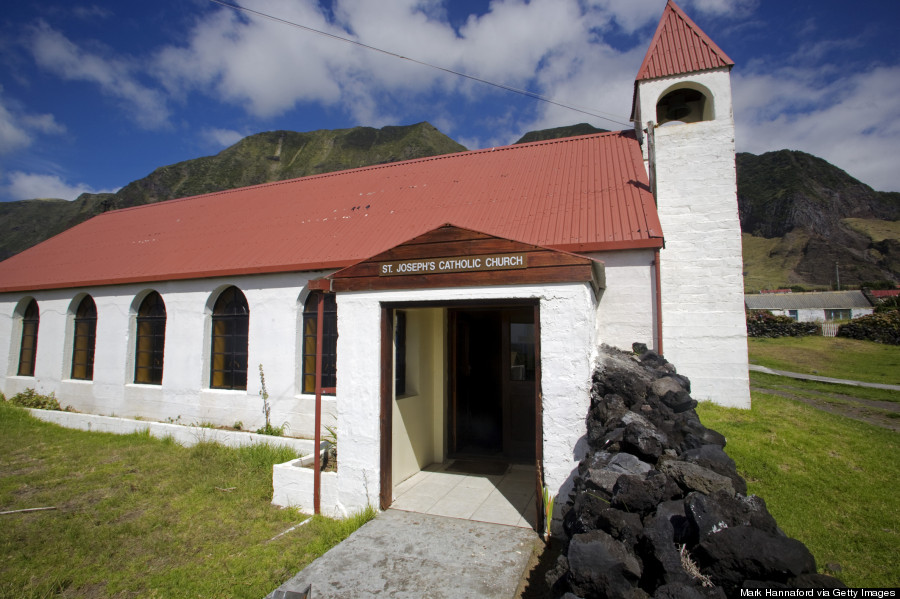
Located over a thousand miles from the nearest landmass, Tristan da Cunha is really remote.
This little group of isolated islands is surrounded by miles and miles of the South Atlantic Ocean. It's 1,750 miles away from the coast of South Africa and 1,500 miles from the nearest landmass, making it the most remote inhabited island group on earth. There are six total islands there: Tristan Da Cunha (the main island), the aptly-named Inaccessible Island, Nightingale Island, Middle, Stoltenhoff and Gough.
125210265
125210268
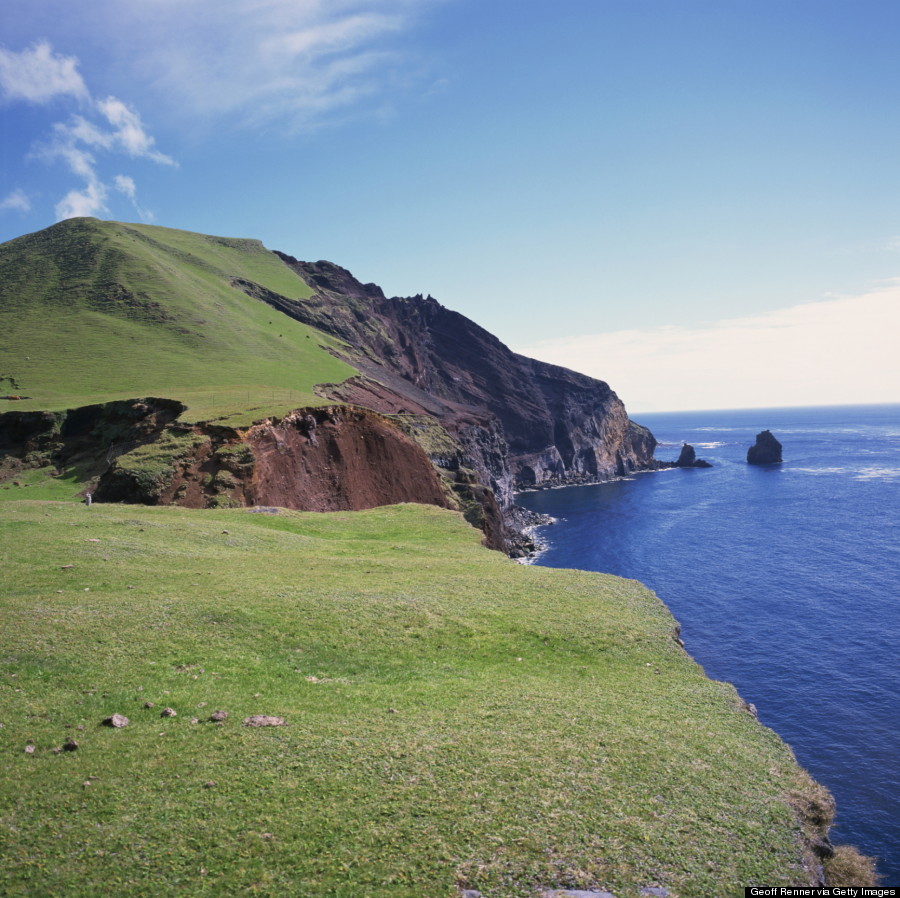
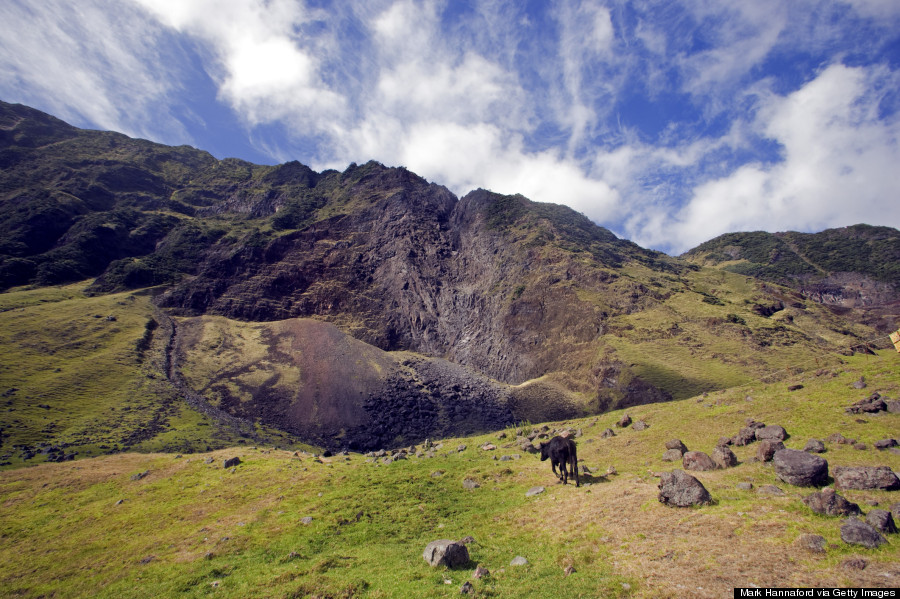
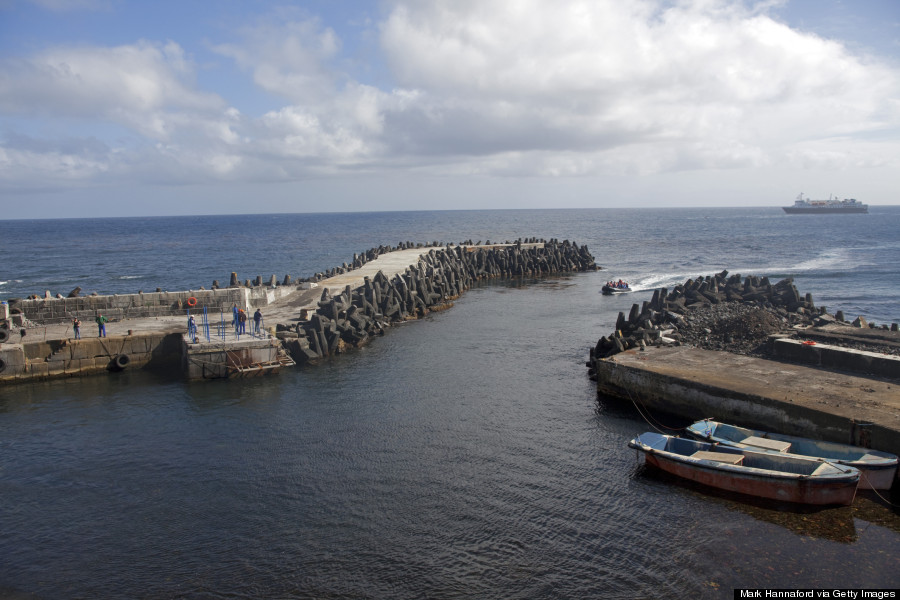
Early explorers passed over Tristan da Cunha because of its rugged landscape, lack of natural harbor and harsh climate with heavy winds throughout the year. The island was settled by the Brits in 1816 and has since played important roles in various wars.
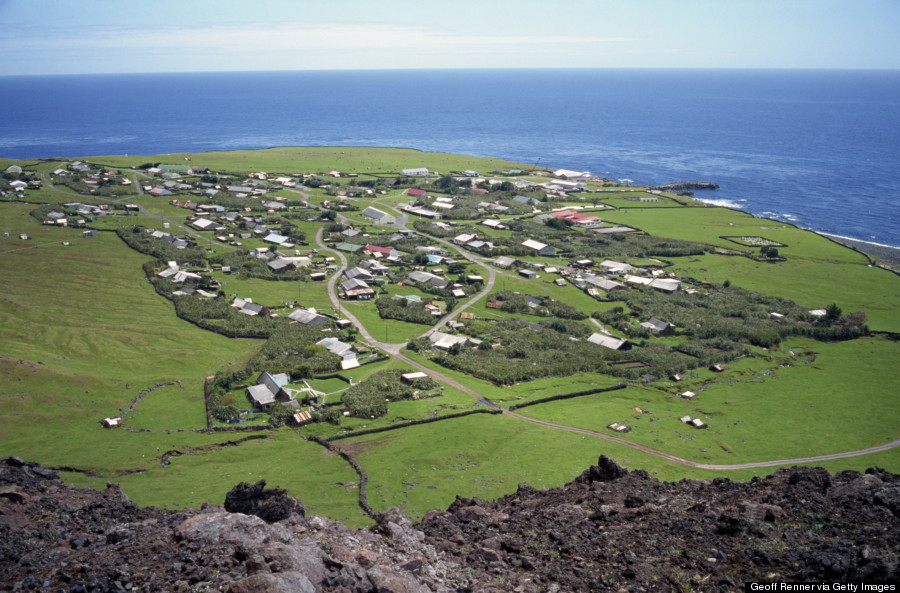
Today, the main island is inhabited by about 275 residents, and no new residents are currently allowed. The island's population is made up of 80 families with just seven surnames, meaning mostly everyone is kind of related.
96169168
96169165
125210255
125210006
Visiting Tristan da Cunha is a trek, but it's worth it if you want to experience true remoteness. All visitors must receive permission before they embark on their adventure. The island is only accessible by ship via a 1,750 mile, six-day boat ride from Cape Town.
Once on the island, visitors can explore the settlement area, called Edinburgh of the Seven Seas, which boasts shops, a golf course, houses, a school and the harbor. While remote, the settlement isn't totally disconnected -- there's television, radio and an online newspaper. AnInternet cafe opened on the island 2006.
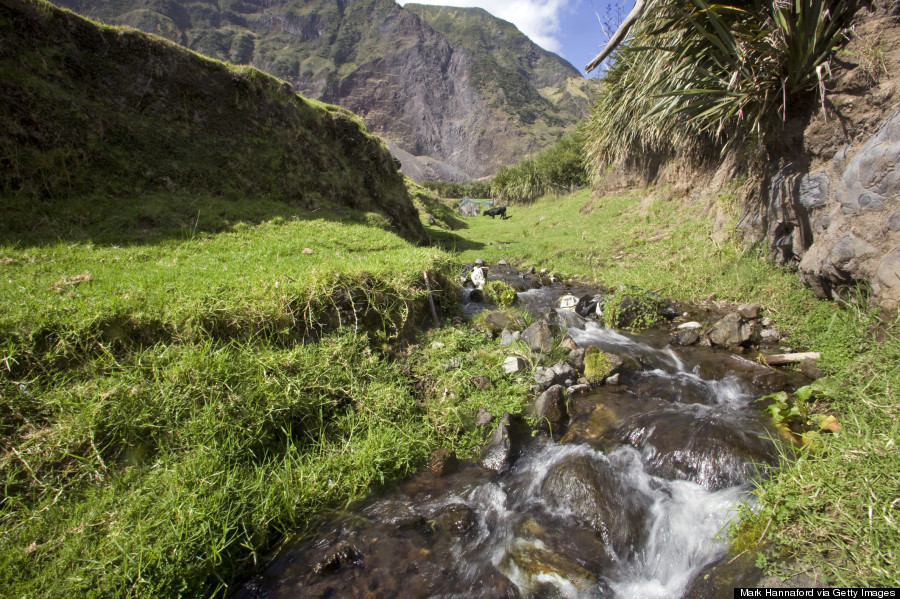
The island is also brimming with wildlife and natural wonders include penguins, albatross, whales, a volcanic park and a variety of vegetation.
140664950
125210001
140664951
tristan da cunha
A visit to Tristan da Cunha is a true adventure. From the island's unique history to its extreme isolation, there's really nothing else like it.

Thursday, August 21, 2014

We interrupt our story . . .

For the first throwback Thursday:
nina hands over the keys to my birthday four wheeler (circa maybe 1985)

the original wooden alert

corner phone booth, famed of song and story


Saturday, August 16, 2014

When last we left our author . . .

She had just dusted off her old middle reader book manuscripts-


And was appalled to realize how badly they were written.  Passive in voice, boring verbs, and a severe lack of attention to detail. 

But the plot line was strong and the characters fairly well drawn.  There was some good stuff there, and the books were, I felt, worth saving.  Armed with my newfound knowledge in how to write decent prose, I immediately set about attempting to rewrite all three novels at once.

Right.  Well it seems like a good idea at the time,

continuity girl
 given that I was going to have to make changes in the first novel that would run through the other two.  And in theory it was a good idea.  It’s just impossible to rewrite three books at the same time and keep everything straight.  At least it was for me.  I either needed to go back to rewriting the novels one at a time, or hire a continuity girl.

There’s never a continuity girl around when you need one.

So I started with Coyote Summer, both because it was originally the first book in the series and because it felt the most complete. I’d played with switching the other two in the series around a bit, and even taken Hurricane Summer out of the series entirely and re-written it as a YA novel. They were going to need some major work.

I re-wrote Coyote Summer 
sentence by sentence. 

Literally.  I tightened and restructured, and moved my heroine's age up a year.  I’d read that kids liked to read books where the hero or heroine was at older than they were, and I intended this book for the 8-12 year old average age range. 

I then sent the book off to my editor for Cuttyhunk: Life On The Rock, and held my breath.


She liked it. Oh, she had many editorial suggestions, and I ended up paying her for a professional edit of the book.
I wanted Coyote Summer to be the strongest possible story when I sent it out this time around. I gave the professionally edited manuscript to  my partner Deborah, and waited rather breathlessly for her opinion. 

It had been quite a while since she’d seen the book.

Her comment? “The end is too rushed. You need two more chapters.”

Surprisingly, this proved to be very easy. I think I must have had the same thought brewing in the back of my mind for some time.


Finally, it was as done as it was going to be. I had researched publishers who would look at this sort of book without an agent, and made a small list. First on the list was a publisher whose work I’d seen at the VA Festival of the Book when I read there the previous year. I’d taken a copy of his catalog, and Coyote Summer seemed a good fit.


I composed an appropriate introductory letter and sent off the first three chapters.
to be continued . . .

Friday, August 1, 2014

I've been very busy

Not writing this blog, as you may have noticed. Or, perhaps not. Either way, it has been not happening here, right under your collective noses.

I have been writing postcard poems, instead. One a day, for the 31 days of August. And haikus, some of which you've seen on my facebook page, if you read that sort of thing. 
And trying to master social media to promote Coyote Summer. 

I did begin to write the story of how the Summerhood novels came about, but it's kind of a long and twisted tale. So I am taking a page from those young upstarts Dickens and Twain and serializing it. 
Here we go- Part the !st.

I first started what has now become the Summerhood Island trilogy (Coyote Summer, Summer of the Ghost/Thief, Hurricane Summer) more than fifteen years ago.  I had been away from Cuttyhunk Island just long enough that I could begin to think about using it as the background for a story. 

I’m not sure why now that I decided to write what was then called a “middle reader.”  Perhaps it was just an age I felt most comfortable with, that period just on the cusp of adulthood, those last few moments when you are convinced that anything is possible if you try hard enough, if you want it enough.  That brief moment when you’ve got full control of your body, 

before the judgments and restrictions of adulthood begin to settle on your shoulders.


As I began to write, I quickly realized that my heroine was largely the girlchild I wish I had been; the child I believe I could have been had I been allowed that freedom.  I actually reined my character in somewhat, as I wanted her life to be  more believable than my imagination.

After I had written the three books in the trilogy I began to shop them around, and quickly discovered there was no market for books like mine at the time.  The bottom had fallen out of the children’s book market, although there was still a small market for picture books.  No one was taking chapter books and the concept of a young adult market was still on the horizon.  Even the classics, the Newberry winners, the Caldecott medalists, were dropping in sales.  

After forty-two straight rejections of any or all of the books, I resigned them to the top drawer of an old file cabinet

where they languished from 2002 until 2012. Meanwhile, I went about my business, writing poetry, opening and closing restaurants, and in general, acting like the adult people told me I had become.  I didn't leave Cuttyhunk Island completely behind, however; I made island the subject of my first nonfiction work, a memoir about running an inn, cooking, and the great people who lived there.


Heartened by the significant if small in scope attention that this work engendered and by the upswing in interest of YA and ‘tween' novels (as middle readers are now called), I pulled my manuscripts out of their dusty file cabinet to see if they were worth saving.  I still remembered and cherished my main character, a strong girl named Jessie, and hoped she would have something to say to a new generation of young readers.

(to be continued . . .)